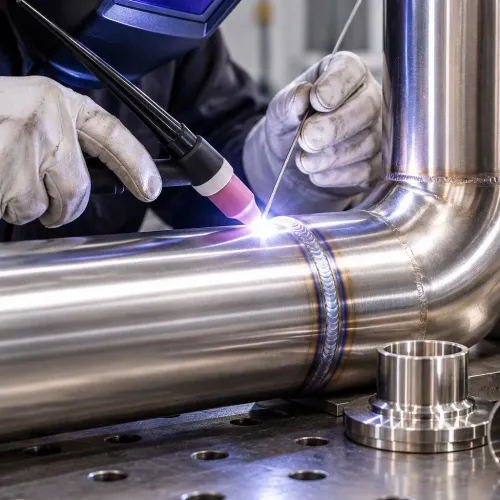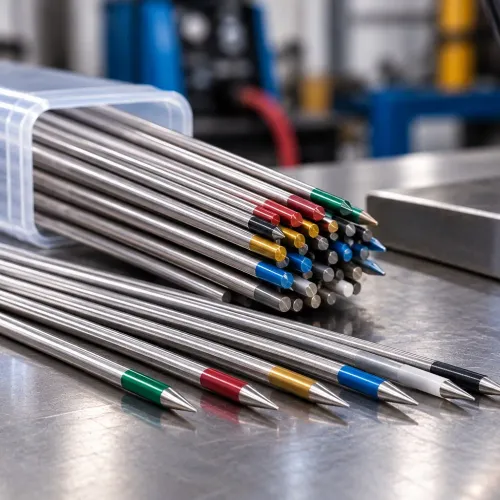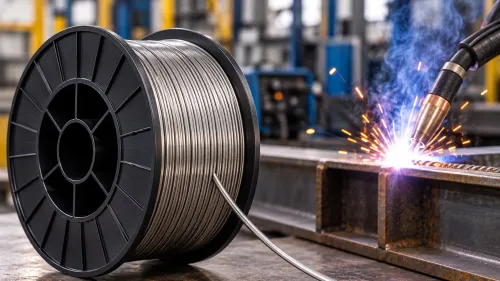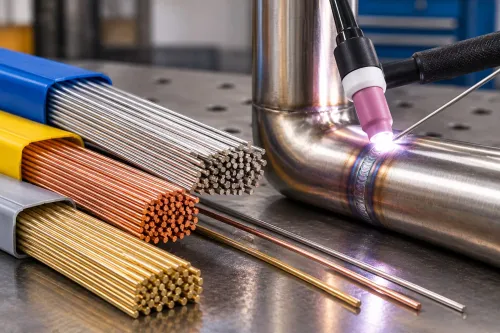
A nickel wire selected only by its nickel content can fail when the joint faces chlorides, caustic chemicals, molten salts, oxidation, thermal cycling or high dilution from steel. By tracing the service environment, alloy family, welding process and joint design, you can identify where continuous nickel wire is appropriate and where another filler or a qualified transition procedure is required.
Key takeaways
- Match nickel wire to oxidation, carburisation, corrosion and creep conditions.
- Use wire for long, mechanised welds; choose electrodes for access and low-volume repairs.
- Control interpass temperature, travel speed and heat input to limit cracking.
- Specify alloy grade, wire diameter, classification, condition, batch traceability and certificates.
Which industrial parts use nickel wire, and when is wire preferable to an electrode?
Nickel wire applications include heater tubes, furnace fixtures, reformer components, heat-treatment equipment, petrochemical pipingers, power-generation parts, chemical vessels, marine equipment, exhaust systems and corrosion-repair overlays. In furnace equipment, select a nickel-chromium-iron or heat-resistant alloy matched to oxidation, carburisation, thermal cycling and creep; do not substitute Alloy 625 wire simply because it resists aqueous corrosion.
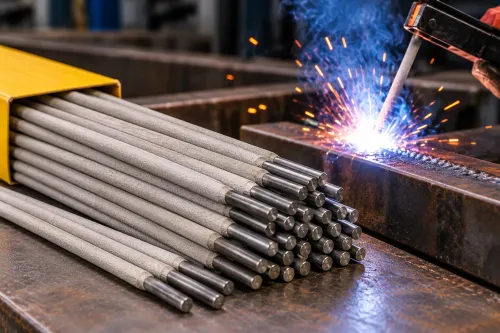
| Continuous wire | Covered nickel electrode |
|---|---|
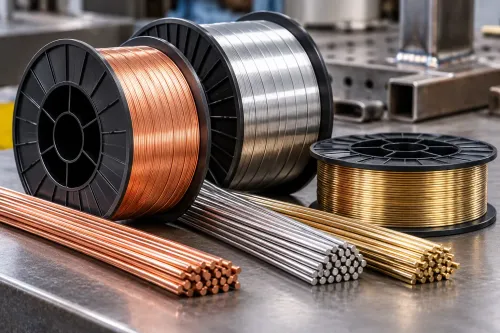
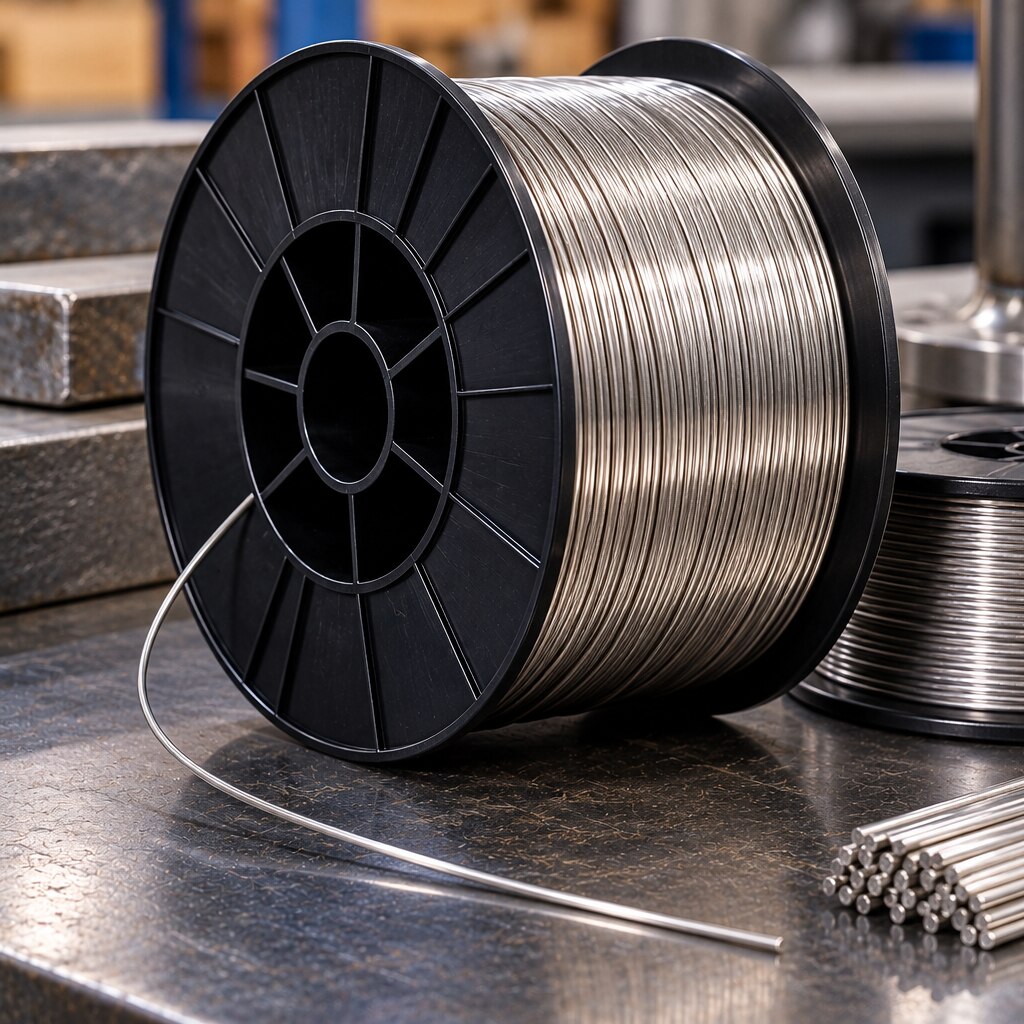
| Supplied on a spool or as GTAW filler rod; deposited through GMAW, GTAW or submerged arc welding | Flux-coated stick with a fixed length and an outer coating |
| Supports mechanised, repeatable deposition on long seams and overlays | Suits manual welding, short repairs, awkward access and site work |
| Pulsed GMAW can reduce spatter and average heat input; wire feed controls deposition | The coating provides shielding and slag, but moisture, storage and slag removal affect quality |
| Requires a power source, torch, shielding gas and clean wire surface | Requires correct current, arc length, coating condition and electrode storage |
Choose wire when you need consistent output on long petrochemical piping or repeated production joints, or when controlling dilution and bead shape matters. Choose a covered electrode when access, portability or a small repair outweighs deposition speed.
ERNiCr-3-type wire commonly joins carbon steel to stainless steel or nickel alloys. ERNiCrMo-3-type wire fits demanding chloride, pitting and repair-overlay duties, but neither replaces a filler designed for long-term furnace oxidation or creep.
How do you match nickel wire chemistry to the service environment?
Match the filler chemistry to the dominant damage mechanism at the weld: oxidation and creep at high temperature, or pitting, crevice attack, stress-corrosion cracking and chemical dissolution in wet service.
| Family or wire | Best fit | Do not choose it for |
|---|---|---|
| Commercially pure nickel: ERNi-1, Nickel 200 | Caustic alkalis, distilled or de-aerated water and reducing environments | Strong oxidising acids or sustained elevated-temperature service without checking carbon limits |
| Nickel-chromium-iron | Furnace fixtures, heater tubes, reformer parts and petrochemical components exposed to oxidation, carburisation or thermal cycling | Chloride crevice corrosion where a molybdenum-bearing grade is required |
| ERNiCr-3 | Dissimilar joints between carbon or low-alloy steel and stainless steel, or heat-resistant nickel-chromium alloys | The most aggressive chloride, sour-service or localised-corrosion duty |
| ERNiCrMo-3, Alloy 625 chemistry | Chloride pitting, crevice corrosion and stress-corrosion cracking with high-temperature strength; also overlays and repairs | A job where long-term creep or oxidation performance demands an alloy-matched furnace filler |
| ERNiCrMo-4, Alloy C-276 chemistry | Wet chlorine, hypochlorite, ferric chloride and mixed acids; molybdenum resists localised corrosion | Routine joining where its corrosion capability adds no service value |
Nickel 201 differs from Nickel 200 through controlled low carbon. Choose Nickel 201 above about 315 °C when graphite precipitation and embrittlement threaten; do not treat the two grades as interchangeable.
For molten salts, sulphur compounds or changing oxidising and reducing atmospheres, qualify the deposited chemistry against the actual cycle. Base-metal dilution can shift that chemistry enough to invalidate a seemingly suitable wire.
How should you set the welding process and heat input for nickel wire?
A sound nickel weld starts with controlled heat, not maximum deposition. Use pulsed GMAW for production joints when you need spray transfer with lower average heat and less spatter; conventional short-circuit transfer adds instability and porosity risk.
Keep the arc short, use stringer beads, and reduce amperage or increase travel speed if the pool becomes wide.
| Process | Wire and polarity | Shielding and heat control |
|---|---|---|
| GTAW | 1.6–3.2 mm GTAW filler wire; DCEN | Pure argon shielding gas; use a trailing shield and internal backing gas where the root must resist corrosion. Best for roots and thin sections. |
| Pulsed GMAW | 0.9–1.2 mm solid wire; DCEP | Argon or an argon-helium blend; tune pulse peak current, background current and travel speed to avoid excessive dilution. |
| Submerged arc welding | Larger wire, commonly 2.4–4.0 mm; DCEP or qualified AC | Use the approved nickel-alloy flux and WPS; high deposition raises dilution and heat input, so mechanise travel and control bead size. |
Keep the joint dry and the base metal above its dew point, but do not apply routine high preheat unless the qualified procedure requires it. Control interpass temperature with contact measurement; many corrosion-sensitive nickel procedures limit it to about 150°C.
Let the weld cool between passes, and qualify voltage, amperage, travel speed and heat input under AWS A5.14/A5.14M and the governing construction code.
How do you prevent cracking, porosity and corrosion loss in nickel-wire joints?
Cleanliness decides whether a nickel joint resists service or fails behind a polished surface. Remove oil, grease, marker, grinding dust and oxide from the joint faces, adjacent base metal and filler wire; trapped contamination causes porosity, lack of fusion and hot cracking. Use dedicated stainless or nickel tools, and keep cleaned surfaces covered until welding.
Use this sequence before and during deposition:
- Machine or grind to bright metal, then wipe with a residue-free solvent. Do not weld over shop primer, sulphur-bearing compounds or lead contamination.
- Fit the joint evenly and confirm root opening, alignment and purge quality. A tight, contaminated root can conceal lack of fusion.
- Deposit narrow stringer beads with controlled interpass temperature. Excessive weaving widens the pool, increases segregation and raises hot-cracking risk.
- Remove oxide and spatter between passes. Let each layer cool within the qualified procedure before adding the next.
| Joint type | Primary control | Defect or loss prevented |
|---|---|---|
| Similar nickel alloys | Match filler chemistry, minimise restraint and keep bead width narrow | Hot cracking and porosity |
| Nickel to steel | Control base-metal dilution, use a qualified buttering or transition layer, then deposit the corrosion-resistant layer | Iron dilution and corrosion loss |
| Nickel cladding | Deposit enough sound overlay thickness and verify chemistry after dilution | A nominally resistant wire producing an under-alloyed surface |
For dissimilar repairs, judge the deposited chemistry—not the wire designation alone. A first layer diluted by iron, chromium or other base-metal elements may need additional layers before it reaches the specified corrosion resistance. Record interpass temperature, bead sequence and dilution limits in the welding procedure.
What should you specify when buying nickel wire for a production or repair job?
A trade name is not a purchase specification. Put the complete filler classification, diameter, delivery form, surface condition, manufacturer lot number and lot certification on the purchase order, and require compliance with AWS A5.14/A5.14M.
Confirm that the classification is accepted by the construction code governing the component, such as the applicable ASME Section IX qualification and service code.
| Filler classification | What it identifies | When it applies |
|---|---|---|
| ERNiCr-3 | Nickel-chromium-iron joining filler | Dissimilar carbon-steel, stainless-steel and nickel-alloy joints |
| ERNiCrMo-4 | Molybdenum-rich C-276-type filler | Wet chlorine, hypochlorite, ferric-chloride and mixed-acid service |
| ERNiCrMo-3 | Nickel-chromium-molybdenum filler | Corrosion-resistant joints requiring Alloy 625-type chemistry |
Before release, ask for three records:
- A lot certification showing deposited chemistry, classification, heat or lot traceability, diameter and surface condition. Do not accept “nickel wire” as the filler classification.
- The qualified WPS and PQR naming the base metals, joint design, welding process, polarity, shielding gas, wire diameter, heat-input limits, preheat, interpass temperature and any post-weld heat treatment.
- The production requirement for dilution control, minimum deposited thickness, number of layers and inspection method, especially for cladding or dissimilar welds.
If RND Welding Pvt Ltd supplies the wire, give them the component material specification and qualified procedure number so the quoted classification and lot documents can be checked against the actual repair or production joint.
Related products
 | Welding Electrode E NICrFe-2 A non-synthetic electrode depositing homogeneous Ni-Cr-Fe alloy composition. It is good resistance to abrasion, oxidation, and corrosion. View product → |
 | Stainless Steel Welding Electrodes ₹ 2,800/KgGet Latest Price Diameter 2.5 mm X 450 mm Material Stainless Steel Size 3.15 mm Length 450 mm Operating Current AC/DC Application/Usage... View product → |
Frequently asked questions
Which industrial parts use nickel wire, and when is wire preferable to an electrode?
Nickel wire is used for heater tubes, furnace fixtures, reformer components, heat-treatment equipment, petrochemical piping, power-generation parts, chemical vessels, marine equipment, exhaust systems and corrosion-repair overlays. Choose wire for long, repeatable or mechanised welds; choose a coated electrode when access, portability or low-volume repair matters more.
How do you match nickel wire chemistry to the service environment?
Match the alloy to the dominant conditions: oxidation, carburisation, thermal cycling, creep, aqueous corrosion, chloride exposure or high-temperature strength. Use a nickel-chromium-iron or heat-resistant alloy for furnace service when its composition suits the atmosphere, and do not select Alloy 625 solely for aqueous-corrosion resistance.
How should you set the welding process and heat input for nickel wire?
Select a qualified GTAW, GMAW, pulsed-GMAW or other procedure for the joint and alloy. Control amperage, voltage, travel speed, shielding gas, bead size, preheat and interpass temperature, because excessive heat input increases distortion, dilution and cracking risk.
How do you prevent cracking, porosity and corrosion loss in nickel-wire joints?
Clean oxide, oil, paint, moisture and sulphur-bearing contamination before welding. Keep wire and joint surfaces dry, use stable shielding, limit arc length and heat input, control interpass temperature, and inspect for cracks, porosity, lack of fusion and excessive dilution.
What should you specify when buying nickel wire for a production or repair job?
Specify the alloy grade and AWS classification, wire diameter, welding process, surface condition, spool or coil format, lot or batch traceability, chemical certificate, mechanical requirements and service temperature. Include base-metal grade, joint design and any post-weld heat-treatment requirement.
Related products
 | Welding Electrodes ₹ 600/KgGet Latest Price Size 2.5mmX350mm Material Copper Certification AWS CE ISO Operating Current AC/DC Application/Usage Automotive Welding... View product → |
 | Welding Electrodes Enicrfe3 Stainless Steel Welding Rod Diameter - 2.5/3.15/4.00/5.00mm Material - NICKEL Welding rod Brand - Esab / Ador / D&H SECHERON/ HONAVOR Application/Usage Construction Country of... View product → |