Choosing this electrode requires more than matching a brand name and diameter to a job. You need to confirm the stainless-steel grade, AWS classification, welding settings, storage condition, preparation method and supplier documentation before releasing it for fabrication.
Key takeaways
- Use 308L Plus for compatible 304 or 304L stainless steel joints.
- Confirm the AWS A5.4 classification, batch details and packet condition before purchase.
- Set current and polarity from the electrode diameter and packet instructions.
- Compare suppliers by traceable, usable kilograms rather than quoted pack price.
Match 308L Plus to the stainless steel you are joining
Use 308L Plus for joining 304 or 304L stainless steel in common 18Cr-8Ni fabrication. The “L” means low-carbon weld metal, normally limited to 0.04% maximum, which reduces chromium-carbide precipitation and sensitisation near the weld. Confirm the exact AWS A5.4 classification printed on the packet; the product name alone is not enough.
| Classification | What it means | When it applies |
|---|---|---|
| E308L-16 | 308L weld metal with a -16 electrode coating | Use when the qualified WPS specifies this coating, position and current arrangement |
| E308L-17 | 308L weld metal with a -17 electrode coating | Use when the ESAB datasheet and WPS approve this classification for the joint |
For ESAB 308L Plus welding requirements in Mumbai, do not substitute either classification casually. E308L-16 or E308L-17 is a poor general-purpose choice for 316 or 316L, duplex, ferritic, martensitic, or heat-resistant stainless steel; use a compatible 316L, duplex, or heat-resistant electrode instead.
Carbon-steel joints and dissimilar-metal joints also need a qualified procedure, because dilution, thermal expansion and corrosion performance can change. Check the electrode classification, base-metal grade and welding-position requirement together before approval.
Check the packet, classification and job documents before purchase
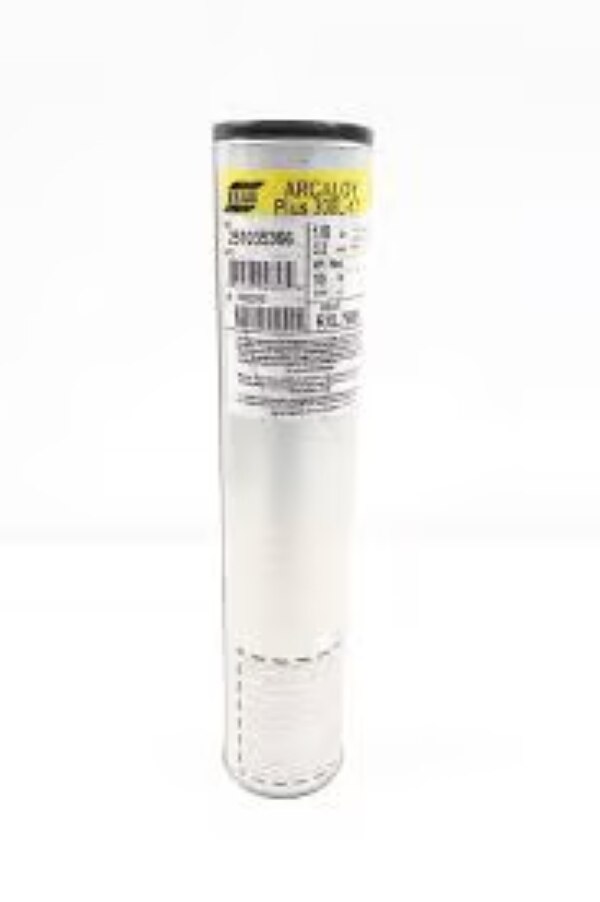
Approve the consumable only after the original ESAB packet, current technical datasheet and job documents agree. “308L electrode” alone does not establish equivalence; confirm the exact classification printed on the packet, such as AWS A5.4 E308L-17 or E308L-16, before you buy esab 308l plus.
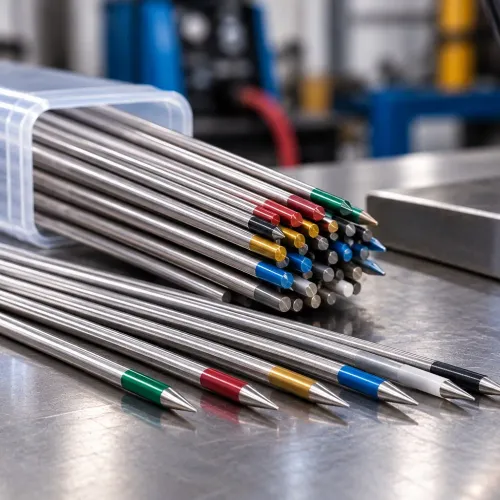
- Packet: verify diameter, net weight, lot or batch number, manufacturing date, sealed condition and manufacturer identification.
- Datasheet: verify AWS A5.4 and, where specified, EN ISO 3581 classification, chemical composition, deposited-metal properties, welding positions, current type, polarity and diameter-specific current range.
- Job file: match the consumable to the base-metal grade, welding position, acceptance standard, qualified WPS/PQR and inspection documents. State the required documentation before issuing a purchase order.
Check these points together:
| Document | Confirm | Why it matters |
|---|---|---|
| Original packet | Classification, diameter, batch and date | Prevents loose, repacked or untraceable electrodes |
| Technical datasheet | Composition, strength, positions and polarity | Confirms the quoted product suits the procedure |
| Purchase specification | Base metal, WPS/PQR, acceptance standard and certificates | Prevents approval based on a product name alone |
Ask the Mumbai supplier for unopened original packaging and batch-linked manufacturer test documentation where required. Record GST, freight, packet weight and usable kilograms; a lower packet price becomes expensive when damp or damaged electrodes create wastage.
Set current, polarity and technique by electrode diameter
For an ESAB 308L Plus electrode in Mumbai, use these amperage figures as starting points, not as a substitute for a welding procedure specification (WPS).
| Diameter | Starting current | Practical use |
|---|---|---|
| 2.5 mm | 50–80 A | Thin sections, root runs and positional work |
| 3.15 mm | 80–110 A | General fabrication and fill passes |
| 4.0 mm | 110–150 A | Heavier joints and higher deposition |
| 5.0 mm | 150–200 A | Thick sections in suitable welding positions |
Select DC electrode-positive (DC+) when the power source permits it. Use AC only when the electrode packet and machine support AC. DC+ commonly gives a stable arc and good penetration, but the current table printed on the supplied ESAB packet overrides these ranges.
Keep the arc short, use controlled travel speed and favour stringer beads over wide weaving. Excessive current creates undercut, spatter, distortion and a larger heat-affected zone; too little current causes sticking, poor fusion and slag entrapment. A 5.0 mm electrode on thin stainless can overheat the joint before it deposits useful metal.
The qualified WPS controls the final amperage, polarity, position, arc voltage, preheat or interpass limits and pass sequence. Confirm the current ESAB datasheet and packet because product revisions, classification, diameter tolerances and test conditions can change the usable range. A supplier’s quoted setting cannot replace those documents.
Protect electrodes from Mumbai humidity and damaged packaging
Keep ESAB 308L Plus electrodes in the original, sealed packet until they are needed. Mumbai’s coastal humidity can enter through a small tear or weak seal, so reject packaging that is wet, punctured, swollen, unlabelled, or already opened.
Open only the quantity required for the shift and return unused electrodes to a dry, sealed container immediately. Do not leave loose electrodes on the welding table, in a toolbox, or overnight in a monsoon-exposed workshop.
Use a holding oven only when the current ESAB instructions or qualified welding procedure specifies that practice. Follow the stated temperature, holding time and maximum number of rebakes; never choose an oven setting by guesswork, because excessive heating can damage the coating and invalidate the consumable condition.
Take this action when the condition is uncertain:
- Damp electrodes: quarantine them; rebake only under the manufacturer’s written limits, then record the treatment.
- Loose electrodes: identify them only if their original batch and condition remain traceable; otherwise do not issue them for qualified work.
- Torn or water-damaged packets: reject or return them, and request unopened original packaging with batch identification and replacement terms.
A holding oven is not a rescue for unknown exposure. If you cannot prove storage history, replace the electrodes rather than risk porosity, unstable arc behaviour or an untraceable weld.
Prepare stainless steel and control heat, contamination and corrosion
Keep stainless steel clean and cool: contamination creates rust, while excess heat causes distortion and sensitisation. For ESAB 308L Plus welding requirements in Mumbai, use dedicated stainless brushes, grinding wheels, clamps and handling tools; never place prepared stainless on dirty carbon-steel benches.
1. Degrease the joint, then remove paint, moisture, oxide and embedded iron. Use a short arc, the lowest current that gives reliable fusion, and stringer beads or narrow oscillation. Excessive current, long arcs and wide weaving increase heat input, undercut and oxidation.
2. Measure the interpass temperature with temperature crayons or a contact thermometer. Keep it within the qualified WPS limit; around 150 °C or lower is a common control for thin 304/304L, but the corrosion and distortion requirements govern. Allow cooling between passes rather than forcing speed.
3. Chip and brush slag from every pass using stainless-dedicated tools. Control sequence, tack spacing and bead size to limit distortion, and minimise time in the sensitisation range; the low-carbon “L” weld metal reduces, but does not eliminate, that risk.
Brown, blue or black heat tint is not merely cosmetic: its oxide scale and chromium-depleted layer can reduce corrosion resistance. Mechanically clean the weld, then apply the specified pickling and passivation treatment, or an approved alternative, and rinse and dry it fully. Never leave free-iron particles on the surface.
Compare Mumbai supplier offers on usable, traceable kilograms
Compare landed cost per usable kilogram, not the box price. To buy ESAB 308L Plus responsibly, calculate: invoice total including GST and freight ÷ net electrode weight × (1 − expected wastage). If you claim GST input credit, compare prices before GST; otherwise include it.
| Quote item | Accept | Warning |
|---|---|---|
| Diameter and net weight | Exact diameter, sealed-pack net kg and length stated | “Per box” price hides a smaller quantity |
| GST and freight | Both shown separately, with Mumbai delivery included | Freight or tax appears only after ordering |
| Traceability | Original unopened packets with batch or lot number and manufacturing date | Repacked, loose or unmarked electrodes |
| Documentation | ESAB datasheet, classification and manufacturer test certificate where specified | Product name offered without supporting documents |
| Storage and delivery | Dry storage details, humidity protection and replacement policy | Damp-weather delivery without packaging assurance |
| Wastage risk | Discount reflects damaged, damp or aged stock; replacement terms are written | You absorb unusable rods and rework |
Ask RND Welding Pvt Ltd for the packet photographs, batch records and documentation before approving a quote. Compare the resulting usable-kilogram cost across 2.5, 3.15 and 4.0 mm diameters, because a lower nominal rate can become expensive after wastage.
Related product
 | Stainless Steel Welding Electrodes Esab 308L Plus Stainless Steel Welding Electrodes ₹ 450/KgGet Latest Price Product Brochure Material Stainless Steel Length 350 mm Size 2.5 mm Brand ESAB Model Name/Number 308L Plus Elongation 45 %... View product → |
Frequently asked questions
Which stainless steels suit ESAB 308L Plus electrodes?
Use 308L Plus for joining 304 or 304L stainless steel in common 18Cr-8Ni fabrication. Confirm the application and weld procedure before using it on another grade.
What should you check before buying a 308L Plus welding electrode in Mumbai?
Check the exact AWS A5.4 classification printed on the packet, electrode diameter, batch or lot number, manufacture or expiry information where provided, sealed packaging and job-document requirements.
How should you set welding current and polarity for 308L Plus?
Set current according to the electrode diameter and the manufacturer’s packet data or approved welding procedure. Confirm polarity before striking the arc; do not copy settings from a different diameter or electrode type.
How do you protect 308L Plus electrodes from Mumbai humidity?
Keep unopened packets sealed, dry and away from workshop condensation. Reject packets with broken seals or damp, damaged electrodes, and follow the manufacturer’s storage and rebaking instructions instead of guessing.
How should stainless steel be prepared before welding with 308L Plus?
Remove oil, paint, moisture, scale and carbon-steel contamination. Use dedicated stainless-steel brushes and tools, control heat input and clean the finished weld to reduce staining and corrosion risk.
Keywords