A purchase request for ESAB CN 1 G is incomplete until the product classification, cast-iron application, electrode diameter, handling method and inspection requirements are confirmed. By the end, you will have a practical specification for sourcing, storing, using and checking this nickel-based covered electrode in a Mumbai industrial setting.
Key takeaways
- Verify the current datasheet, package photograph and classification before ordering.
- Match nickel electrode selection to cast iron, joint condition and service temperature.
- Specify preheating, interpass temperature, bead size and cooling controls in the procedure.
- Require batch traceability, sealed packaging and moisture checks at receipt.
Confirm What ESAB CN 1 G Is Before You Order
A quotation for ESAB CN 1 G is not technically acceptable until you verify the current ESAB product datasheet, a clear package photograph and the classification printed on the product label.
CN 1 G is generally associated with nickel-based covered electrodes for cast-iron repair, but its trade name alone does not prove whether it is ENi-CI, ENiFe-CI or another AWS A5.15 family classification. A generic nickel welding consumables listing is not evidence of ESAB CN 1 G identity.
Ask the supplier to provide:
- The AWS classification or EN ISO classification shown on the current datasheet and package.
- Chemical composition, coating type and deposited-metal properties.
- Available electrode diameters and lengths, with polarity and current range for each diameter.
- Shelf-life, storage limits and any manufacturer instructions for holding or reconditioning.
- Approved base-metal combinations, including gray, ductile, malleable or dissimilar cast-iron applications.
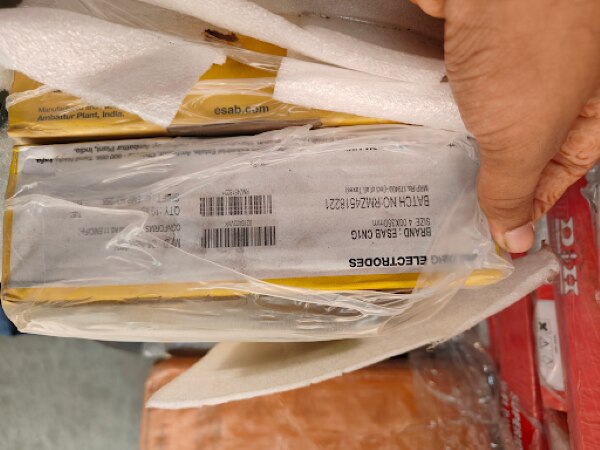
- The package photograph showing the ESAB name, CN 1 G designation, classification, diameter, batch number and manufacturing or expiry information.
Compare the datasheet with the physical pack before approving the purchase order. If the seller supplies only a catalogue title, an untraceable photograph or a generic “nickel electrode” description, stop the quotation review and request product-specific evidence. Without diameter, polarity, classification and current range, competing offers are not technically comparable.
Match the Electrode to the Cast Iron and Service Condition
Write the base metal and service condition into the purchase request: gray iron, ductile iron, malleable iron or a named dissimilar joint. “Nickel electrode” is not enough; the wrong deposit can crack, leave a hard heat-affected zone or resist machining.
| Option | What it offers | When it applies |
|---|---|---|
| ENi-CI | Nickel deposit with good machinability | Gray-iron repair where post-weld machining matters and restraint is controlled |
| ENiFe-CI | Higher deposit strength and better restraint tolerance | Ductile, malleable or restrained cast-iron repairs needing stronger build-up |
| 308L or 2209 | Stainless deposit for compatible stainless-to-steel or stainless dissimilar joints | Use only when the joint metals, corrosion exposure and procedure support that alloy; neither is a default cast-iron repair filler |
| E NiCrCoMo-1 or E NiCu-7 | Nickel-chromium-cobalt-molybdenum or nickel-copper chemistry | Select for a confirmed high-temperature or corrosive service requirement, not by electrode name alone |
| Matching nickel TIG rod | Bare filler matched to the nickel alloy and TIG process | Use when low dilution, controlled heat input or precision repair justifies TIG |
| Structural-steel classification | Filler qualified for the specified structural-steel grade and process | Use for structural fabrication under the project WPS and code |
Service temperature, corrosive medium, joint restraint, machining allowance and dilution decide the choice. A nickel cast-iron electrode suits a repair that preserves machinability; it does not become structural steel because it is listed among industrial welding supplies in Mumbai.
AWS D1.1 requirements for applicable structural-steel work do not turn ESAB CN 1 G into a structural-steel consumable. Confirm the classification before ordering nickel welding consumables.
Define the Welding Procedure for a Crack-Sensitive Repair
Write the WPS as a repair instruction, not “use esab cn 1 g.” Specify joint shape, groove depth, land, root gap and access. Grind to sound metal; remove oil, paint, graphite, rust and loose particles. Stop-drill visible crack ends where appropriate, then verify that the active crack is removed.
- Choose controlled preheat or localized cold welding. For controlled preheat, record a measured target range, such as 150–250°C, and keep the interpass temperature within the approved WPS limit. For cold welding, keep the casting cool, deposit short staggered beads, and allow cooling intervals between beads.
- Record DC polarity, electrode diameter and current. Use the current ESAB datasheet; a starting range is 50–80 A for 2.5 mm, 70–110 A for 3.2 mm and 90–140 A for 4.0 mm. Use a short arc and short stringer beads.
- Limit tack welds to small, widely spaced tacks placed in sound metal; remove cracked or contaminated tacks before welding. Stagger beads around the repair, clean slag and brush between passes, and keep gloves, tools and electrodes free of oil and moisture.
- Avoid long continuous beads, excessive heat input and rapid quenching. Cast iron has low ductility and high restraint, so these conditions drive cracking and distortion.
CN 1 G SMAW electrodes use no shielding gas. Separate TIG or GMAW nickel work needs a specified AWS A5.14 bare filler and an ISO 14175 gas grade; “esab cn 1 g welding for consumables requirements in mumbai” must not combine those packages.
Control Moisture and Coastal-Climate Storage in Mumbai
1. Receive each pack under cover, especially after monsoon transport. Inspect the moisture-resistant seal, batch number, product label, manufacturing date or shelf-life information, torn cartons, rust staining and unidentified packs. Record the delivery condition before moving the electrodes into stores.
2. Quarantine any damp, torn, rust-stained or untraceable pack. Mark it “HOLD—DO NOT ISSUE,” separate it from accepted stock, photograph the defect and notify procurement for the supplier’s written disposition or replacement. Do not mix questionable electrodes with usable welding consumables in mumbai.
3. Keep unopened packs sealed until issue. Open only the quantity needed for the shift, then record opening time, operator issue and return status. Monsoon humidity, open-shop storage and repeated exposure to ambient air can damage coating integrity, destabilise the arc and promote porosity, poor fusion and inconsistent weld quality.
4. Use a holding oven only at the temperature and duration stated in the ESAB product instructions, with a temperature log. Never apply a generic low-hydrogen rebake cycle to a nickel electrode: excessive heat can damage its coating or exceed its handling limits.
Store industrial welding supplies in mumbai in a dry, covered area, off the floor and away from rain, condensation, chemicals and welding fumes. If coating becomes soft, cracked or visibly damp, return the pack to quarantine rather than welding with it.
Write a Comparable Purchase and Inspection Requirement
A comparable quotation for esab cn 1 g welding for consumables requirements in mumbai must identify the product precisely; a trade name alone cannot prove classification or suitability. Put these requirements in the enquiry:
- State the exact ESAB CN 1 G designation shown on the current manufacturer datasheet and package, plus the AWS A5.11 or ISO classification.
- Specify each electrode diameter and length, operating current range, polarity, required quantity by diameter and packaging unit.
- Require batch number, manufacturing date or shelf-life information where stated, batch traceability and a manufacturer certificate covering classification and compliance.
- Define delivery packaging: intact moisture-resistant seals, protected cartons and replacement terms for wet, torn, rust-stained or unidentified packs.
- Make the supplier separate electrodes from other items. The quote must say whether it includes filler wire, shielding gas, regulators, flowmeters and inspection support; CN 1 G SMAW electrodes do not need shielding gas.
- State the acceptance inspection: visual testing after every repair; dye penetrant testing for suitable surface-breaking cracks; and radiography or ultrasonic testing when the job specification and geometry justify them.
Screen the repair for hot cracking, lack of fusion, porosity, carbon or tungsten contamination, excessive dilution, distortion and mismatched corrosion performance. For welding consumables in Mumbai and industrial welding supplies in Mumbai, RND Welding Pvt Ltd can be considered after confirming identity, availability, batch documents and separately required filler metals or gases.
Frequently asked questions
What should you confirm before ordering ESAB CN 1 G?
Request the current ESAB product datasheet, a clear package photograph and the classification printed on the product label. Check the product name, diameter, batch or lot number, packaging condition and quantity.
How do you match ESAB CN 1 G to a cast-iron repair?
Identify the cast-iron grade, crack location, section thickness, contamination and service condition first. Compare the electrode’s datasheet classification and deposited-metal properties with the repair’s strength, machinability and thermal requirements.
What belongs in a welding procedure for a crack-sensitive cast-iron repair?
Document joint preparation, cleaning, preheat, interpass-temperature limits, welding current and polarity, bead length, peening instructions and controlled cooling. Include a repair sequence that limits heat concentration and prevents crack extension.
How should you store nickel welding consumables in Mumbai?
Keep unopened packs sealed in a dry, clean store away from condensation, salt-laden air and direct contact with floors or walls. Record receipt condition, batch number and any drying or exposure instructions stated on the current ESAB datasheet.
What should a comparable purchase and inspection requirement include?
State the exact product designation, electrode diameter, classification, pack size, quantity, datasheet revision, batch traceability, certificate documents, packaging condition and rejection criteria. Inspect labels, seals, moisture damage and supplied quantity before acceptance.
Keywords