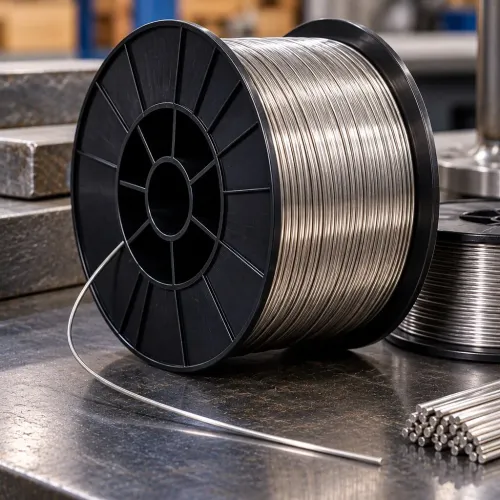
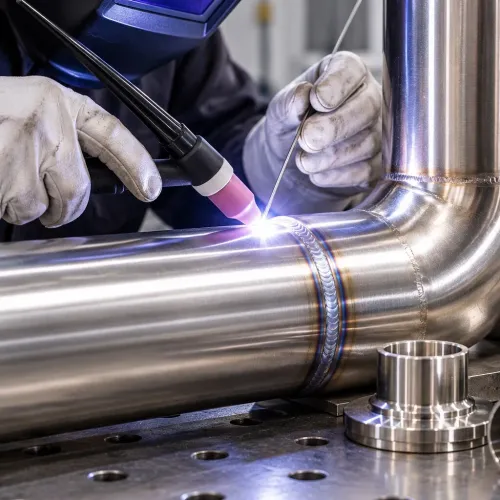
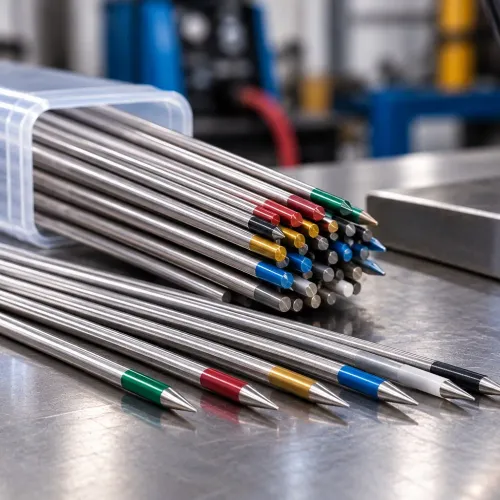
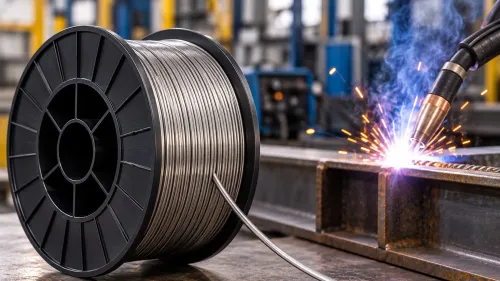
Large-scale fabrication projects demand welding processes that deliver consistency, speed, and structural integrity. One of the most widely used methods in heavy engineering is submerged arc welding (SAW), known for producing deep penetration and clean welds. However, the performance of this process depends significantly on selecting the right submerged arc wire.
From pressure vessel manufacturing to structural steel fabrication, choosing an appropriate welding wire helps improve productivity while ensuring the finished weld meets mechanical and quality requirements.
Why Submerged Arc Welding Is Preferred
Submerged arc welding is commonly used for long, continuous welds in heavy industrial applications. The welding arc remains covered beneath a layer of granular flux, protecting it from atmospheric contamination.
This process offers several advantages:
- High deposition rates
- Excellent weld quality
- Reduced spatter
- Deep weld penetration
- Improved productivity
- Consistent weld appearance
Because of these benefits, SAW is widely adopted in fabrication facilities handling large steel structures and industrial equipment.
Factors to Consider When Selecting Submerged Arc Wire
Not every welding wire is suitable for every application. Proper selection depends on several technical considerations.
Base Material Compatibility
The welding wire should match the composition and mechanical properties of the parent material. Carbon steel, low-alloy steel, and stainless steel applications often require different wire grades.
Mechanical Property Requirements
Industrial projects frequently specify:
- Tensile strength
- Yield strength
- Toughness
- Ductility
- Impact resistance
Selecting the appropriate wire helps meet these performance expectations.
Welding Position
Although submerged arc welding is primarily used in flat and horizontal positions, project design and joint configuration may influence wire selection.
Plate Thickness
Thicker materials often require different wire diameters and welding parameters to achieve complete fusion.
Importance of Flux Compatibility
The welding wire and flux work together as a complete system.
Choosing compatible combinations helps achieve:
- Stable arc performance
- Low hydrogen weld deposits
- Proper slag removal
- Desired chemical composition
- Improved weld appearance
Using mismatched wire and flux combinations may reduce weld quality or increase the likelihood of defects.
Applications Across Industries
Submerged arc wire supports fabrication across multiple sectors.
Common applications include:
- Pressure vessels
- Structural steel fabrication
- Wind energy towers
- Shipbuilding
- Heavy machinery
- Oil and gas equipment
- Boilers
- Storage tanks
- Industrial piping
- Bridge construction
Many manufacturers in Mumbai and Maharashtra depend on SAW for projects requiring reliable, repeatable weld quality.
Quality Indicators to Look For
Before purchasing submerged arc wire, buyers should evaluate:
- Manufacturing consistency
- Dimensional accuracy
- Smooth wire feeding
- Clean copper coating where applicable
- Compliance with international standards
- Batch traceability
These factors contribute to predictable welding performance and fewer production interruptions.
Storage and Handling Tips
Proper storage protects welding wire from contamination and moisture.
Recommended practices include:
- Store in dry environments.
- Protect packaging from damage.
- Avoid exposure to excessive humidity.
- Keep wire clean before use.
- Rotate inventory using first-in, first-out practices.
Good storage practices help maintain consistent welding quality throughout production.
Common Mistakes During Selection
Industrial buyers sometimes encounter avoidable issues by:
- Choosing wire based only on price
- Ignoring compatibility with flux
- Using incorrect wire diameter
- Overlooking project specifications
- Failing to verify certifications
Considering technical requirements before purchasing helps reduce rework and production delays.
Supporting Reliable Industrial Fabrication
Selecting the right submerged arc wire is an important decision that affects weld quality, productivity, and long-term structural performance. Manufacturers supplying heavy engineering industries benefit from working with dependable welding consumable providers that understand technical specifications and industry standards.
Companies such as RND Welding Pvt Ltd supply submerged arc welding consumables for fabrication businesses serving Mumbai, Maharashtra, and industrial markets across India, helping engineering teams maintain consistency in demanding production environments.
Keywords