“SS Enicrcomo 1” is an ambiguous purchasing term: ENiCrCoMo-1 identifies a nickel-alloy covered electrode, not an ordinary stainless-steel rod. Before you approve it for plant maintenance, confirm the classification, alloy match, welding procedure, storage condition and traceable documentation against the repair’s service chemistry and temperature.
Key takeaways
- Do not classify ENiCrCoMo-1 as stainless steel; verify AWS A5.11 designation.
- Match the alloy to nickel-alloy service, corrosive chemicals and high-temperature conditions.
- Fix preheat, interpass temperature, storage and welding procedure before issuing electrodes.
- Request heat, batch, AWS classification and test documents from your Mumbai supplier.
What does ENiCrCoMo-1 mean on a welding-consumables quotation?
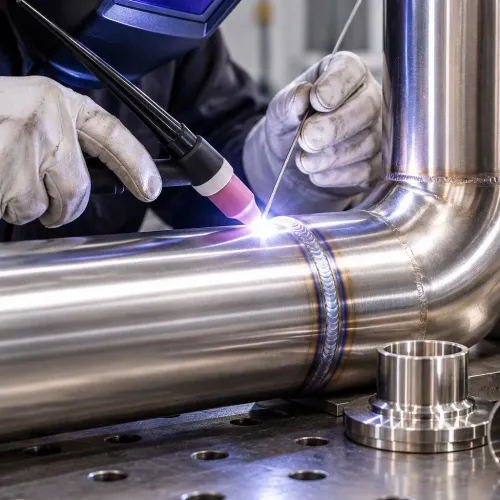
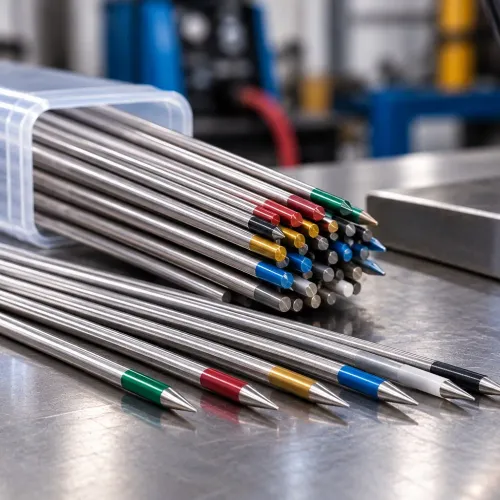
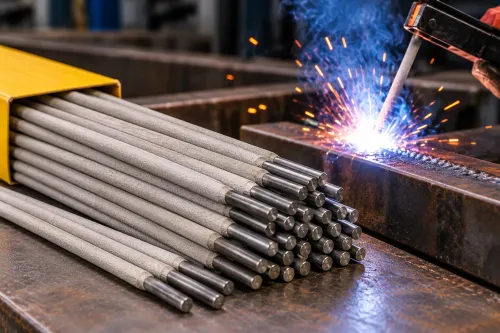
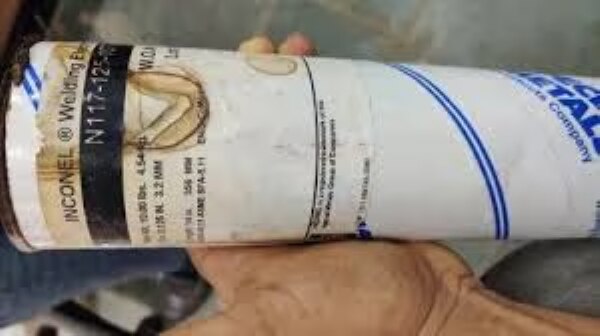
ENiCrCoMo-1, also written E NiCrCoMo-1 or Enicrcomo 1, is a nickel–chromium–cobalt–molybdenum covered-electrode classification for shielded metal arc welding (SMAW) under AWS A5.11. It is not a conventional stainless-steel classification. The buying phrase “ss enicrcomo 1 welding rod” does not prove that the product is stainless steel.
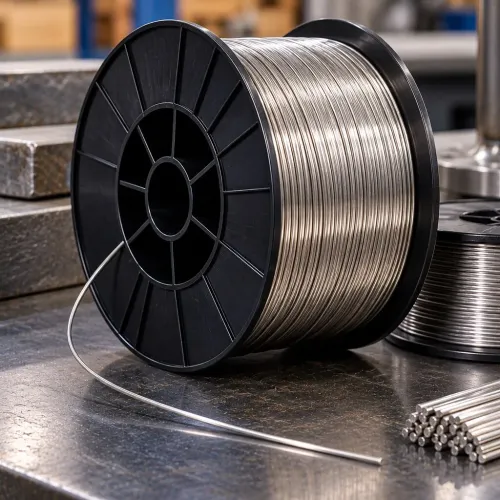
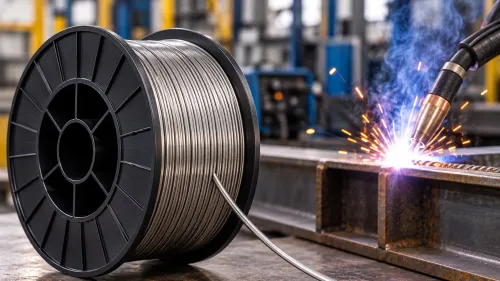
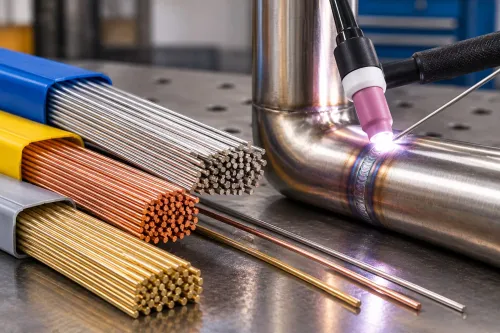
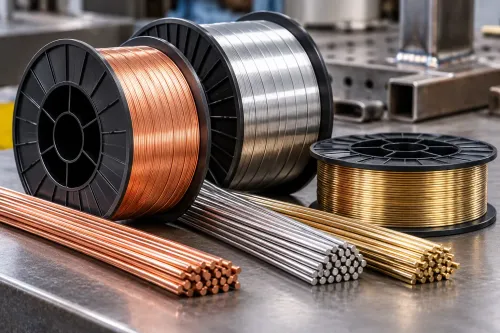
Do not treat a bare GTAW rod or GMAW wire as interchangeable with this electrode. AWS A5.14 covers bare nickel and nickel-alloy electrodes and rods, so the quotation must identify the product form and the complete AWS or equivalent EN/ISO designation.
Ask the supplier to state the following on the quotation and supporting documents:
- The exact classification, nominal alloy or UNS grade, diameter and product form: covered SMAW electrode, bare GTAW rod or GMAW wire.
- Deposited weld-metal limits for chromium, nickel, cobalt, molybdenum, iron, carbon and controlled trace elements, supported by the manufacturer’s data sheet or material certificate.
- Mechanical and corrosion properties, intended base-metal grades, and any restrictions on service temperature or application.
This information lets you compare enicrcomo welding consumables with the qualified welding procedure specification (WPS), rather than matching labels alone. The WPS must name the same process, classification and product form; a similar alloy name cannot validate a different filler.
For dissimilar joints, also check dilution because weld chemistry at the fusion boundary can differ from the unused electrode.
Which plant metals and service conditions justify this alloy family?
ENiCrCoMo-1 earns consideration when the base metal and service demand nickel-alloy performance, not simply because the repair involves stainless steel. Check carbon steel, low-alloy steel, stainless steel or a nickel alloy against operating temperature, oxidation, carburising exposure, chlorides, caustic solution, reducing or oxidising acids, wet H₂S and hydrofluoric-acid service.
| Service or comparison | ENiCrCoMo-1 decision | Do not assume |
|---|---|---|
| High temperature, oxidation or carburising | Consider when the deposited chemistry and manufacturer data cover the temperature and atmosphere | E316L is an automatic equivalent |
| Chloride, caustic or acid exposure | Verify corrosion data and cracking resistance for the named process fluid | “Chemical plant” on a label proves suitability |
| Dissimilar carbon, low-alloy or stainless steel joint | Check dilution at the fusion boundary and the qualified deposited chemistry | E309L is always adequate |
| Stainless repair or stabilised grade | Compare the specification with E316L or E347 requirements | “SS EnicrCoMo” confirms stainless classification |
A search for a chemical plant welding rod in Mumbai or stainless steel welding consumables in Mumbai does not replace this check. Match the manufacturer’s intended base-metal grades and deposited chromium, nickel, cobalt, molybdenum, iron and carbon limits to the plant equipment specification.
Then identify the repair: a joint, corrosion-resistant overlay, wear repair or pressure-boundary restoration. Require engineering confirmation for wet H₂S and hydrofluoric-acid service, where a wrong filler can crack or corrode despite a sound-looking bead. ENiCrCoMo-1 is not a universal substitute for E316L, E309L or E347.
What welding controls must be fixed before the electrode reaches the job?
Fix the WPS and electrode-preparation controls before issuing the rod to the welder; a catalogue entry cannot choose settings for your joint.
1. Confirm that the product is a covered SMAW electrode, then record polarity, current type and the manufacturer’s amperage range separately for every diameter. “AC/DC” is not a machine setting. Record whether each size is approved for flat, horizontal, vertical and overhead welding, because coating behaviour and deposition rate can restrict position.
2. Set arc length, bead width, travel speed, heat input, interpass temperature and maximum weaving in the WPS. Excessive weaving and heat input increase dilution, reduce corrosion performance and raise cracking risk, especially at a carbon-steel, low-alloy-steel or stainless-steel fusion boundary where deposited chemistry changes.
3. Grind and solvent-clean the joint until mill scale, paint, oil, grease, sulphur residues, lead, zinc and copper are gone. Use dedicated stainless-steel or nickel-alloy brushes, files and abrasives; carbon-steel-contaminated tools can introduce inclusions, porosity or corrosion sites.
This preparation matters whether you are evaluating ENiCrCoMo welding consumables or searching for SS ENiCrCoMo welding consumables in Mumbai.
4. Request the product data sheet before storage or rebaking. It must state sealed-storage conditions, rebaking temperature, rebaking time and maximum electrode exposure. Do not apply a generic stainless-steel drying cycle: humidity can damage the coating, while excessive or repeated rebaking can impair coating performance.
How should you buy traceable ENiCrCoMo-1 consumables in Mumbai?
Treat “ss enicrcomo welding for consumables in mumbai” as a controlled purchase enquiry, not a request for a generic stainless rod. Ask each supplier to state:
- Manufacturer’s exact product designation, AWS A5.11 classification, diameter, operating positions, polarity and current range
- Stock condition, manufacture date, shelf life, storage history, minimum order quantity, delivery time and replacement policy
- Traceable heat or lot number, certificate of conformity and material test certificate
- EN 10204 Type 3.1 documentation when your plant specification calls for it; obtain Type 3.2 and additional testing when the owner or governing code requires them
| Check | Acceptable evidence | Why it matters |
|---|---|---|
| Product identity | Matching designation, AWS classification, product form and diameter | “Chemical plant welding rod” does not prove alloy identity |
| Traceability | Heat or lot number on the sealed pack and certificates | You can link the delivered electrodes to the approved WPS |
| Supply authority | Authorisation confirmed by the original manufacturer or brand owner | Local stock alone is not an authorised supply channel |
| Delivery assurance | Written lead time, stock condition and replacement terms | A cheap lot is costly if it arrives late or fails inspection |
For stainless steel welding consumables in Mumbai, verify an authorised-distributor claim directly with the brand owner. RND Welding Pvt Ltd is a Mumbai supply contact only when it provides these records and matches its quotation to the approved WPS. Compare suppliers on documentation, lot traceability and delivery reliability, not only the quoted kilogram rate.
Related products
 | Welding Electrodes E nicrcomo-1welding electrodes ₹ 4,000/KgGet Latest Price Diameter 2.5 mm X 450 mm Material Stainless Steel Brand Arcos Application/Usage Construction Operating Current AC/DC Size... View product → |
 | Stainless Steel Welding Electrodes ₹ 2,500/KgGet Latest Price Diameter 2.5 mm X 450 mm Material Stainless Steel Brand Special metal Application/Usage Construction Dia 6 mm Size 3.15 mm... View product → |
How do you release the consumable for a safety-critical plant repair?
Release the consumable only after the repair engineer confirms that the purchased lot matches the approved procedure, qualified welder and equipment requirements.
1. Identify the governing construction or repair code and the owner specification. For pressure-containing work, ASME Section IX commonly governs the welding procedure and welder performance qualification alongside the applicable equipment code. Do not treat “chemical plant welding rod in Mumbai” or “ss enicrcomo 1 welding rod” as an approval.
2. Compare the purchase against the qualified WPS. Confirm the same welding process, AWS classification, product form, diameter range, polarity, welding position, preheat, interpass-temperature limit and heat-input limits. Keep the procedure qualification record and welder qualification record as separate documents; one does not replace the other.
3. Inspect the sealed pack before release. Match its batch or heat number to the certificate, check the classification and chemistry, examine the coating for cracks, chips or moisture damage, and verify the shelf life and storage or rebaking records. A missing certificate, unclear lot number or broken seal requires a hold.
4. Route dissimilar joints and overlays through engineering review. The review must address dilution at the fusion boundary and the final corrosion or service requirement, not just the nominal alloy name. Hold the lot when chemistry, classification, certificate, shelf life or storage history is missing.
A “chemical plant” or “stainless” label is not evidence of suitability.
Frequently asked questions
What does ENiCrCoMo-1 mean on a welding-consumables quotation?
ENiCrCoMo-1 is an AWS A5.11 covered-electrode classification for SMAW. It identifies a nickel–chromium–cobalt–molybdenum alloy electrode, not a conventional stainless-steel electrode.
Which plant metals and service conditions justify ENiCrCoMo-1?
Use this alloy family when the repair involves compatible nickel alloys or demanding dissimilar-metal work exposed to corrosive chemicals, heat or other conditions defined by the approved welding procedure. Confirm the base-metal grade and service chemistry before ordering.
What welding controls must be fixed before the electrode reaches the job?
Define the approved WPS, base-metal combination, joint preparation, preheat, interpass-temperature limit, current range, polarity, pass sequence, cleaning method and electrode-baking or holding instructions before issue.
How should you buy traceable ENiCrCoMo-1 consumables in Mumbai?
Ask for the exact AWS A5.11 classification, manufacturer, product datasheet, lot or heat number, manufacturing date, storage condition and certificate of conformance. Check that the markings match the quotation and packaging.
How do you release the consumable for a safety-critical plant repair?
Have welding engineering verify the WPS and material compatibility, inspect the unopened package, record batch identity, confirm controlled storage and issue only the quantity authorised for the repair. Retain inspection and traceability records.
Keywords