A usable purchase requirement must identify more than the Superon brand: it must specify the electrode classification, base metal, diameter, position, polarity, machine output, storage condition and required documentation. By checking these details before ordering, you can reject unsuitable substitutes, prevent moisture-related failures and obtain stock that matches the approved welding procedure.
Key takeaways
- State the Superon classification, diameter, job material, position and required quantity.
- Match electrode diameter, amperage, polarity and welding position to the classification data sheet.
- Use nickel-based electrodes for cast iron when the joint and repair method require them.
- Confirm batch details, sealed packaging, storage condition and stock location before acceptance.
What information belongs in a Superon electrode requirement?
A complete requirement identifies the job, not just the brand. “Superon electrode” is incomplete because different classifications have different deposited-metal properties, coating behaviour and permitted applications.
1. State the parent metal: cast iron, carbon steel or stainless steel, including its grade; plate or casting thickness; joint type; root gap; welding position; access limitations; required weld strength; and service conditions such as impact, corrosion, temperature or cyclic loading.
2. Specify the exact AWS, IS or ISO classification, such as E6013, E7018 or E308L-16. For structural work, reference the approved welding procedure and applicable standard, including AWS A5.1/A5.1M, ISO 2560 or IS 814 where relevant. Do not request only “6013,” “7018” or “Superon.”
3. Give the machine output, current type, polarity, electrode diameter and required quantity. State whether the machine supports AC, DC electrode-positive or DC electrode-negative operation, and identify any duty-cycle limit that affects production.
4. Request the documents needed for acceptance: manufacturer test certificate, certificate of conformity, lot or batch traceability and third-party inspection records when the project specification requires them.
5. Add the delivery location, including the Mumbai site or warehouse and required delivery date. A superon welding electrode for requirements in mumbai is useful only when it describes the job, classification and documentation—not when it repeats a commercial brand name.
How do you confirm the correct Superon classification and avoid substitutions?
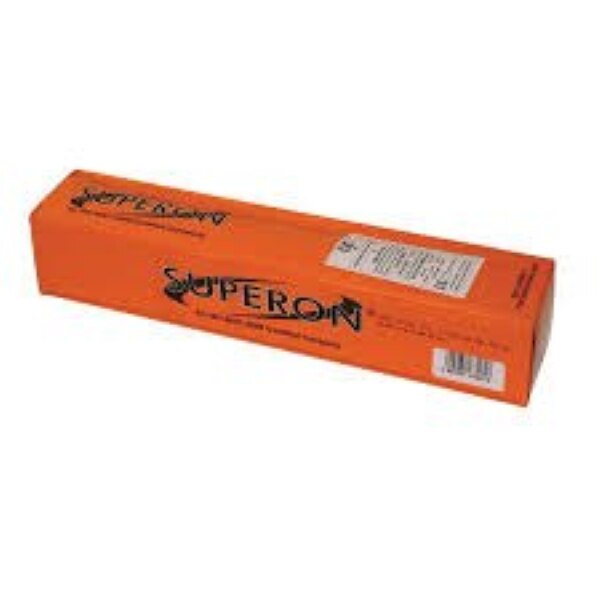
Before you buy superon welding electrode, match the exact classification to the approved welding procedure, not just the brand or a shortened grade. Request a clear, undamaged pack label and product data sheet showing:
- AWS, IS or ISO designation
- Diameter and coating type
- Permitted welding positions
- Current range and polarity
| Classification | Coating and strength meaning | Selection consequence |
|---|---|---|
| E6013 | Rutile-type, general-purpose electrode | Do not treat it as a low-hydrogen structural substitute |
| E7018 | Basic low-hydrogen electrode; “70” identifies 70-ksi minimum tensile strength | Follow tighter moisture control, storage and exposure instructions |
E6013 and E7018 have different arc behaviour, deposition characteristics and handling requirements. Neither is an automatic substitute for the other; obtain project or procedure approval before changing classification.
For stainless steel, identify the parent alloy and service environment first. E308L-16 suits many 304/304L-type joints, E316L-16 suits many 316/316L-type joints, and E309L-16 is common for stainless-to-carbon-steel joints. Confirm the qualified procedure before ordering.
Cast iron, high-strength structural steel, stainless steel and dissimilar-metal repairs need different consumable decisions. Reject any quote that says only “6013,” “7018” or “Superon.” The quotation must state the complete classification, diameter and project approval, or you cannot verify what will arrive.
How should diameter, amperage, polarity and position be matched?
Match the electrode to the approved product data sheet and welding procedure before choosing a machine setting. Compare diameter with plate thickness, root gap, joint access, welding position and available machine output; there is no universal amperage for a diameter.
| Diameter | Practical effect | Check before approval |
|---|---|---|
| Small | Suits restricted roots, narrow gaps and lower machine output; gives lower deposition | Confirm it can fill the joint without excessive passes |
| Medium | Balances access, deposition and heat input | Match it to the procedure’s pass sequence |
| Large | Increases deposition rate and heat input, but needs more amperage, space and control | Confirm access, distortion limits and machine capacity |
Ask the supplier to state the amperage range, recommended voltage, current type and polarity for the exact classification and diameter. “AC/DC” is incomplete: identify AC, DC electrode-positive or DC electrode-negative, as specified on the product data sheet.
Check that the welding machine can deliver the required current continuously at the intended duty cycle. A machine that reaches the listed amperage only briefly can produce an unstable arc or interrupted passes.
Require a position rating: flat, horizontal, vertical-up, vertical-down or overhead. Do not assume that a listed diameter or iron-oxide coating supports every position.
For structural work, compare the selection with heat-input, interpass-temperature and pass-sequence limits in the procedure. Approve a nearest-size substitute only through the responsible welding engineer or procedure owner, after checking current range, access, deposition rate and positional limits.
When is the coating suitable, and how should cast iron be welded?
An iron-oxide coating can provide a manageable arc and slag behaviour for suitable work, but it is not a universal cast-iron solution. Compare the procedure limits with rutile, basic low-hydrogen and specialised cast-iron consumables; superon welding electrode availability does not justify choosing a coating by catalogue wording alone.
| Option | Main advantage | Check before selection |
|---|---|---|
| Iron-oxide | Manageable arc and slag behaviour | Procedure limits, strength and position rating |
| Rutile | General-purpose handling | Deposited properties and approved applications |
| Basic low-hydrogen | Hydrogen control for specified work | Storage, rebaking, exposure and holding-temperature rules |
| Specialised cast-iron | Designed for cast-iron repair risks | Casting grade, repair depth and required properties |
Confirm the casting grade, repair depth, restraint, service load and required mechanical properties. High-strength structural steel, stainless steel, dynamically loaded restrained joints and work requiring a specified low-hydrogen classification are warning cases. Product data must confirm vertical or overhead approval before you attempt those positions.
Prepare cast iron by following this sequence:
- Remove oil, grease, paint, rust and loose graphite.
- Grind to sound metal and expose cracks beyond the visible opening.
- Preheat when the qualified procedure requires it.
- Control interpass temperature and deposit short runs with pauses.
- Peen each bead only when the procedure permits it.
- Cool the repair slowly under insulation or another approved method.
These controls reduce thermal shock and cracking. Use the qualified procedure for temperature limits and pass sequence rather than copying settings from a different electrode.
What should you verify before ordering and accepting Mumbai stock?
Before accepting Mumbai stock, make the order prove that the required electrode—not merely the Superon brand—is available for dispatch.
1. Ask a Superon electrode supplier in Mumbai to confirm the exact AWS, IS or ISO classification, diameter, quantity, pack size, batch or lot number, manufacturing date, confirmed warehouse quantity, dispatch location and delivery date. “Ex-stock” means little without a quantity and dispatch commitment.
2. Require the quotation to state whether the price includes GST, transport within Mumbai, unloading and the minimum order quantity. It must also specify the remedy for wet, torn or damaged packs: replacement, credit or rejection.
3. For E7018-type low-hydrogen electrodes, request the manufacturer’s storage temperature, rebaking method and limits, permitted exposure time after opening, and heated-quiver holding instructions. Do not use E6013 handling assumptions for E7018.
4. Inspect every carton before acceptance. Quarantine stock showing water damage, torn inner packs, broken seals, coating deterioration or missing labels; Mumbai humidity and monsoon exposure make packaging defects a serious moisture-control warning.
5. Retain the pack label with the fabrication records and request the manufacturer’s test certificate or certificate of conformity when the project specification demands it. Check the tax invoice for the legal seller, then request an authorisation or dealership letter where an authorised channel is required.
RND Welding Pvt Ltd can be included in the enquiry when the comparison covers classification, traceability, condition and delivery—not brand availability alone.
Related product
 | Welding Electrodes Material Cast Iron Diameter 2.5 mm X 450 mm Size 3.15 mm Length 500 mm Application/Usage Construction Coating type Iron Oxide Operating Current AC/DC... View product → |
Frequently asked questions
What information belongs in a Superon electrode requirement?
State the Superon product classification, electrode diameter, base metal, joint type, welding position, polarity, amperage range, required quantity and delivery location.
How do you confirm the correct Superon classification and avoid substitutions?
Request the exact classification printed on the pack and compare it with the approved welding procedure, certificate or product data sheet. Do not accept a substitute solely because its diameter or colour matches.
How should diameter, amperage, polarity and position be matched?
Use the classification's product data sheet to select diameter and amperage, then confirm its permitted polarity and positions against the welding procedure. A setting that works for one electrode does not validate another.
When is the coating suitable, and how should cast iron be welded?
Choose the coating and electrode classification for the base metal and service condition. For cast iron, clean and preheat the repair as specified, use a compatible nickel-based electrode when required, deposit short beads, peen while hot and control cooling to limit cracking.
What should you verify before ordering and accepting Mumbai stock?
Confirm the exact classification, diameter, quantity, batch or lot number, manufacture or expiry information where marked, intact packaging, storage condition, delivery location and replacement terms before accepting stock.
Keywords