Industrial titanium welding depends on more than choosing a diameter and an alloy name: classification, chemistry, joint compatibility, shielding and traceability all affect weld integrity. By the end, you will be able to write a purchase specification, assess an ER Ti-2 certificate and identify whether a supplied wire is suitable for your qualified welding procedure.
Key takeaways
- Confirm whether you need bare wire, rod or coated electrode before ordering.
- Request AWS A5.16 classification, heat number and chemical analysis for ER Ti-2.
- Match filler grade to the titanium parent-metal grade and service conditions.
- Use trailing shielding, clean handling and controlled gas coverage to prevent contamination.
How to identify titanium wire, rod and electrode correctly
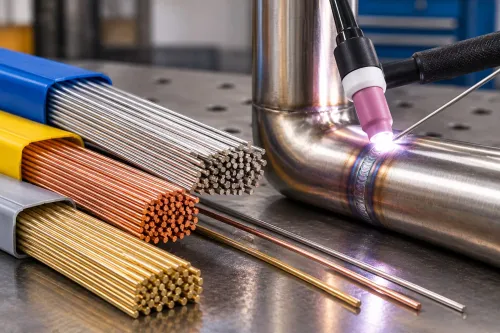
Identify titanium consumables by form, standard and classification—not by the generic phrase “titanium filler wire.” Bare titanium welding wire has no flux coating; “filler wire” describes its use in adding metal to a joint.
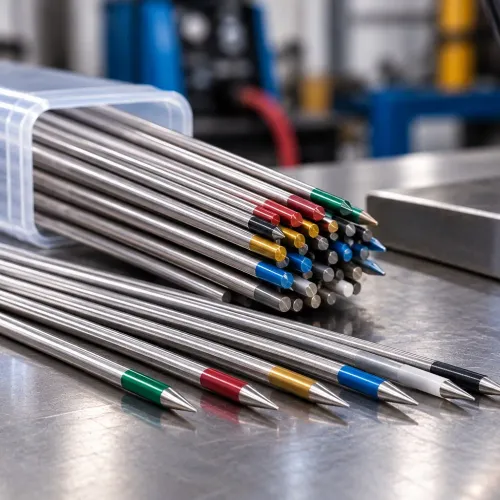
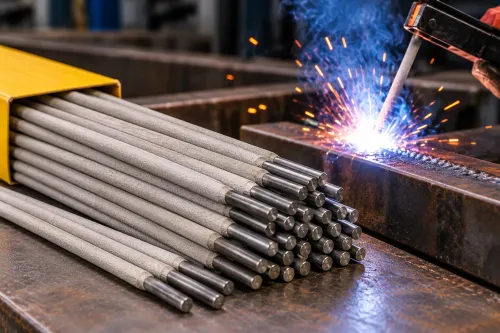
A straight TIG filler rod is the same type of solid consumable supplied in cut lengths, while a coated welding electrode has a flux covering and is designed for a different arc process.
| Form | What it means | Typical use |
|---|---|---|
| Bare filler wire | Solid, uncoated titanium alloy | GTAW, mechanised welding or MIG |
| Straight TIG filler rod | Bare wire cut into lengths | Manual GTAW |
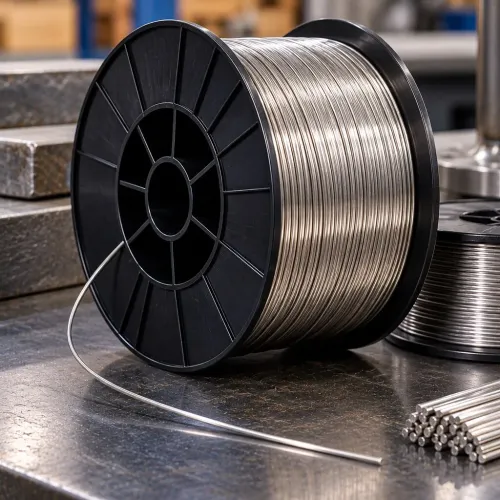
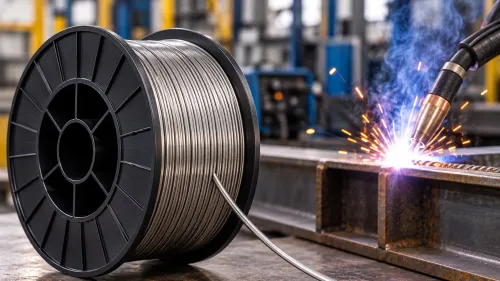
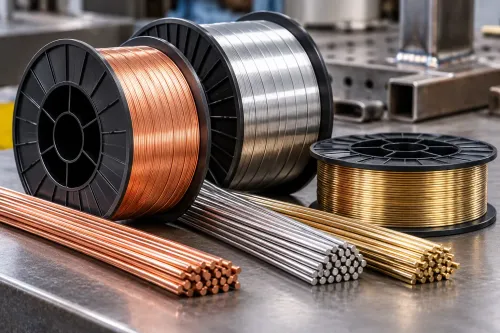
| Spool-fed wire | Bare wire wound on a reel | Mechanised or MIG applications |
| Coated electrode | Flux-covered consumable | Processes using a flux coating; not normal ER Ti-2 GTAW |
ER Ti-2 welding wire is normally a bare filler classification for GTAW, not a flux-coated electrode. The same alloy can arrive as TIG cut lengths or spool-fed wire; spool winding, liner cleanliness and contact-tip fit then affect feeding and contamination.
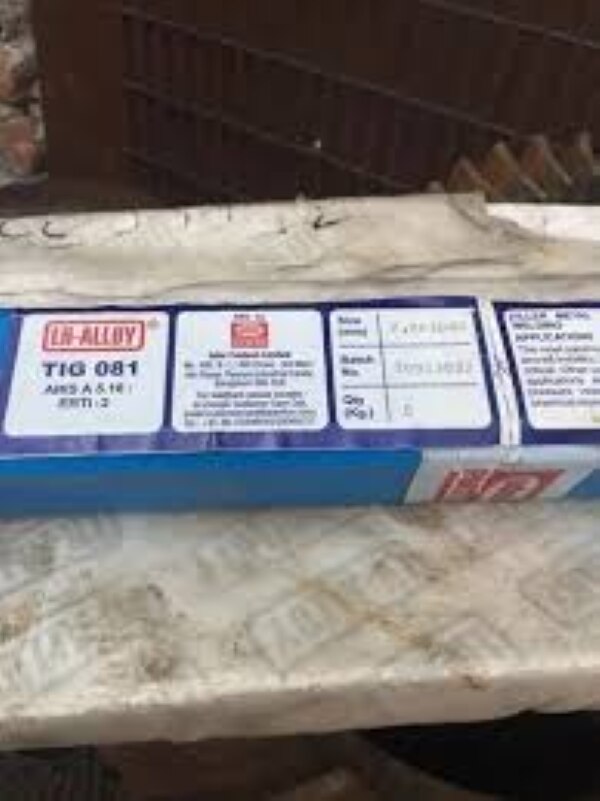
Use AWS A5.16/A5.16M for bare titanium and titanium-alloy welding electrodes and rods. ISO 24034 covers solid wires, strip electrodes and rods for fusion welding of titanium and titanium alloys.
Your purchase order should state the governing standard, classification, diameter and delivery form, such as ER Ti-2, 1.6 mm, straight cut lengths or spool. Ordering only “titanium filler wire” leaves the supplier to guess the form and process.
What chemistry and certificates ER Ti-2 must demonstrate
An ER Ti-2 welding wire certificate must show the principal AWS chemistry limits below, with titanium as the balance.
| Element | Maximum limit |
|---|---|
| Carbon | 0.10% |
| Oxygen | 0.25% |
| Nitrogen | 0.03% |
| Hydrogen | 0.015% |
| Iron | 0.30% |
ER Ti-2 is the titanium filler wire classification for commercially pure Grade 2 titanium, commonly identified as UNS R50400. It is not Ti-6Al-4V, Grade 5, or ER Ti-5; substituting it can leave a joint below the strength or chemistry required by the qualified procedure.
Verify the current edition of AWS A5.16/A5.16M or ISO 24034 named in the purchase order. Compare the heat or lot certificate with the specified classification, chemical limits, diameter and tolerance, delivery form, and mechanical-property requirements. Do not accept an ER Ti-2 label alone.
Request a mill test certificate or certificate of conformity for:
- Safety-critical work
- Regulated production
- Customer-specified traceability
- Qualified WPS/PQR work
- Purchases where interstitial content affects ductility or service life
The welding wire requirements are incomplete without traceability. Record the heat number, lot number and packaging identification, then retain those records with the receiving inspection and job documentation. A certificate that omits the heat or lot reference cannot reliably connect the stated chemistry to the wire you received.
How to match filler grade to the titanium parent metal
Match the filler to the design requirement, not the parent-metal grade alone. For commercially pure titanium, compare tensile strength, required ductility and service corrosion exposure before choosing titanium filler wire; ER Ti-2 is a common balance for general corrosion-resistant fabrication, not an automatic answer.
| Grade | Filler decision | What to verify |
|---|---|---|
| Grade 1 | Same-grade filler when maximum ductility and lower strength suit the design | Formability, tensile requirement and corrosion environment |
| Grade 2 | ER Ti-2 for same-grade joints and many general corrosion-resistant applications | Strength, ductility and specific service chemistry |
| Grade 3 | Grade 3-compatible filler or the qualified alternative | Higher strength requirement and retained ductility |
| Grade 4 | Grade 4-compatible filler or the qualified alternative | Highest commercially pure grade strength and service exposure |
| Grade 5 | ER Ti-5 or the filler named by the procedure | Ti-6Al-4V chemistry and Grade 5 strength; ER Ti-2 is not a substitute |
Use this decision path:
- For a same-grade joint, start with matching filler, then confirm the qualified WPS/PQR.
- For dissimilar commercially pure grades, select the filler that satisfies the weaker-side strength, ductility and corrosion demands.
- For titanium-to-alloy joints, follow the WPS/PQR exactly; it may deliberately select another filler for tensile strength, ductility, corrosion resistance, crack resistance or service temperature.
Diameter is a process decision within the welding wire requirements: relate it to joint thickness, amperage, position, process and deposition control. Fine wire suits small GTAW joints; thicker sections and mechanised work may require larger, spool-fed wire.
Which GTAW controls prevent titanium weld contamination
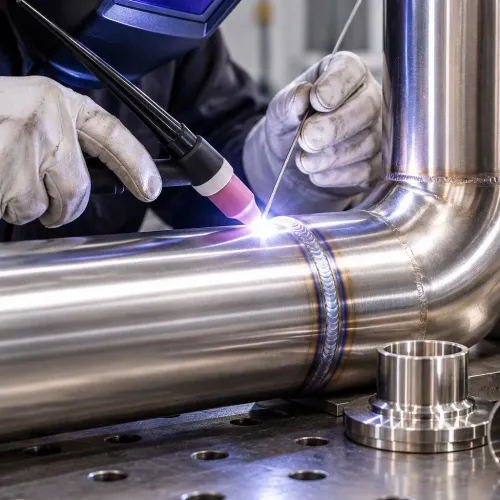
Use DCEN, a clean suitable non-consumable tungsten, and high-purity argon—commonly specified at 99.995% or better—to protect titanium after the arc leaves the puddle. Fit a gas lens with a large cup and use a trailing shield where the torch alone cannot cover the cooling weld.
| Control | Practical requirement | What goes wrong |
|---|---|---|
| DCEN and tungsten | Keep polarity direct current electrode negative; use uncontaminated tungsten | Arc instability and inclusions |
| Shielding gas | Use procedure-specified high-purity argon | Air introduces oxygen and nitrogen |
| Trailing coverage | Cover the hot weld and filler end until below the procedure’s oxidation-sensitive range | Blue, gray or chalky weld |
| Reverse purge | Purge with argon when the root is exposed | Root-side contamination |
Set gas flow from the approved procedure, not from guesswork. Verify hose and fitting leaks, drafts and turbulence: excessive flow can entrain air, while low flow leaves the weld unprotected.
Prepare the joint and titanium welding wire before welding:
- Degrease with acetone or another approved non-chlorinated solvent.
- Remove oxide with a dedicated stainless-steel brush that has never touched carbon steel.
- Handle wire with lint-free materials and clean gloves.
- Keep out chlorinated cleaners, shop dirt and moisture.
Treat silver or bright metallic weld appearance as the target. Blue, purple, gray, white or powdery discoloration requires procedure review rather than automatic acceptance. These are core welding wire requirements, not cosmetic preferences.
What to specify and inspect when sourcing wire in Mumbai
Treat welding wire in Mumbai as a traceable production material, not a generic consumable. Your purchase order and incoming inspection must control acceptance, even when a supplier confirms the product description.
1. Specify AWS A5.16/A5.16M or ISO 24034, the classification such as ER Ti-2, diameter and permitted tolerance. State whether you need straight TIG rods or spool-fed wire; do not order only “titanium filler wire.”
2. Require the heat or manufacturing lot number, certificate of conformity or material test certificate, and matching packaging identification. RND Welding Pvt Ltd can confirm classification, certificate, lot traceability and delivery form before dispatch, but your WPS/PQR and incoming inspection remain the acceptance authority.
3. Accept only sealed original packaging with an intact label and storage instructions. Quarantine wire with a broken seal, condensation, oil, moisture or unexplained relabelling; an ER Ti-2 welding wire certificate cannot validate a contaminated surface.
4. Store unopened packs dry, raised from the floor and segregated from carbon-steel, galvanized-steel and copper-contaminated consumables. Mumbai’s humid coastal air makes prolonged exposure after opening a practical contamination risk.
5. Inspect every rod or spool before issue. Clean it only by the approved procedure, using clean gloves and a suitable approved solvent; reject wire dragged across a dirty bench or touched with oily hands when contamination could have entered surface irregularities. Wiping it once does not prove embedded contamination is gone.
These are the core welding wire requirements: low interstitial contamination, clean surface, controlled diameter, dry packaging and complete lot traceability.
Related product
 | Welding Electrodes ₹ 2,800/KgGet Latest Price Wire Thickness 2 mm Grade Titanium-2 Brand Ador fontech Material Stainless Steel Color Silver Packaging Box Established in... View product → |
Frequently asked questions
How do you identify titanium welding wire, rod and electrode correctly?
Check the product form, diameter, AWS A5.16 classification, grade, heat number and packaging. Bare wire has no flux coating; a rod is cut-length filler, while an electrode may refer to a GTAW tungsten electrode or a coated consumable.
What chemistry and certificates should ER Ti-2 welding wire demonstrate?
Request a certificate of conformity and mill test certificate showing the AWS A5.16 ER Ti-2 classification, heat number, chemical analysis and supplied diameter. Compare the reported titanium, oxygen, nitrogen, hydrogen, carbon, iron and other residual limits with the specified standard.
How do you match titanium filler grade to the parent metal?
Record the parent alloy grade before selecting filler. Match commercially pure titanium with the specified compatible grade, and use the welding procedure specification when joining different grades or designing for strength, corrosion resistance or elevated temperature.
Which GTAW controls prevent titanium weld contamination?
Use clean, oxide-free parts and filler, dedicated stainless tools, high-purity argon, adequate torch shielding and a trailing shield. Maintain gas coverage until the weld cools enough to prevent blue, purple, grey or white oxidation.
What should you inspect when sourcing titanium welding wire in Mumbai?
Specify grade, AWS classification, diameter, length or coil form, surface condition, packaging, quantity, certificate requirements and delivery conditions. Inspect the sealed pack, label, heat number, certificate, wire cleanliness and visible oxidation before acceptance.
Keywords