
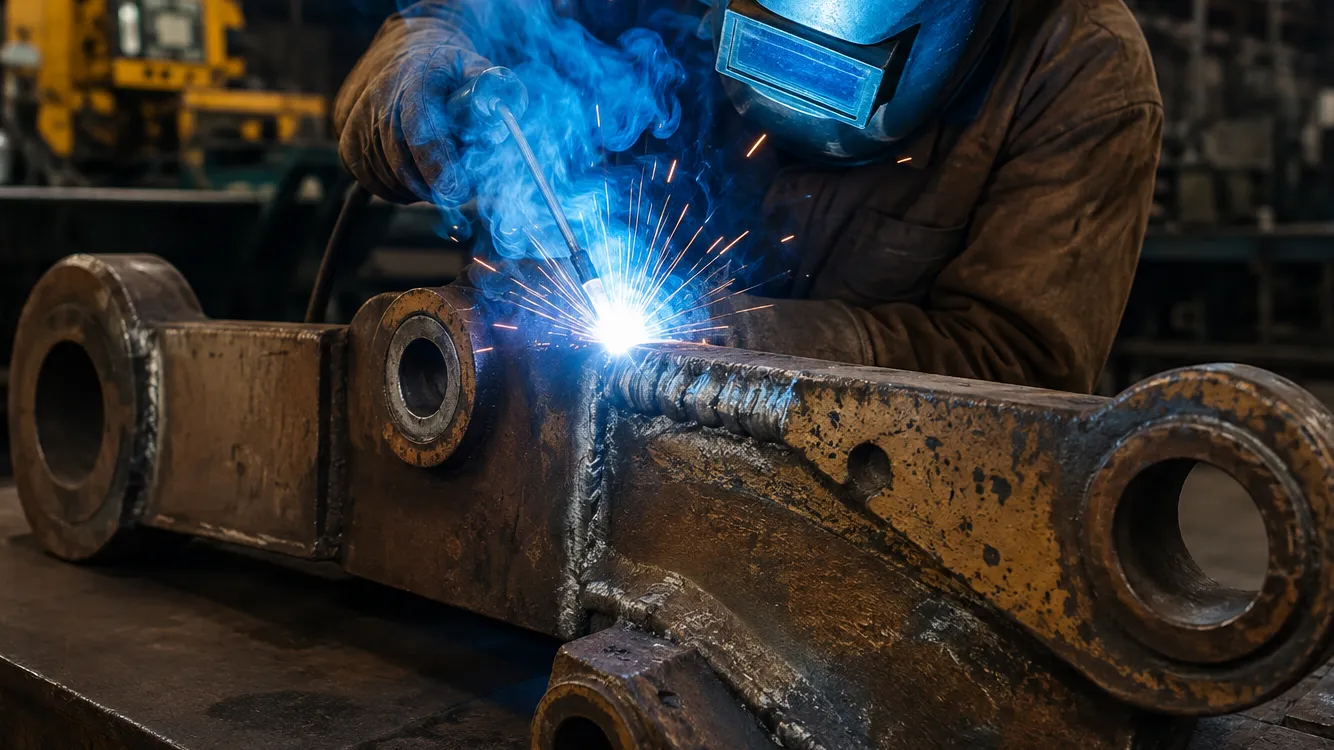
Industrial equipment operates under demanding conditions every day. Heavy loads, abrasion, corrosion, heat, and continuous vibration gradually wear down critical components. Replacing large machinery can be expensive and disruptive, which is why maintenance welding has become an essential practice across manufacturing, mining, construction, power generation, and process industries.
Rather than replacing worn components immediately, maintenance welding restores damaged surfaces, extends service life, and helps businesses reduce downtime while maintaining operational efficiency.
What Is Maintenance Welding?
Maintenance welding refers to the repair, restoration, and reinforcement of worn or damaged metal components using specialized welding techniques and consumables.
Instead of manufacturing a new part, technicians rebuild the existing component so it can continue operating safely and efficiently.
Industries commonly apply maintenance welding to:
- Industrial machinery
- Structural equipment
- Material handling systems
- Pressure equipment
- Heavy fabrication
- Manufacturing tools
- Construction machinery
- Processing equipment
Why Equipment Wears Over Time
Industrial environments expose machinery to multiple forms of damage.
Common causes include:
- Continuous friction
- Surface abrasion
- Corrosion
- High operating temperatures
- Mechanical impact
- Metal fatigue
- Chemical exposure
- Repetitive loading
Ignoring early signs of wear often leads to more extensive failures and costly repairs.
Benefits of Maintenance Welding
A planned maintenance welding program offers several advantages.
Longer Equipment Service Life
Restoring worn components delays replacement and maximizes the value of existing assets.
Reduced Downtime
Scheduled repairs minimize unexpected equipment failures that interrupt production.
Lower Operating Costs
Repairing selected areas is often more economical than replacing entire assemblies.
Improved Operational Reliability
Properly restored components continue performing according to operational requirements.
Better Resource Utilization
Maintenance welding supports sustainable manufacturing by reducing material waste and extending equipment usability.
Applications Across Industries
Maintenance welding serves a wide range of industrial sectors.
Manufacturing Plants
Production machinery experiences continuous wear that can affect output quality.
Power Plants
High-temperature systems require periodic repairs to maintain safe operation.
Oil and Gas Facilities
Pipelines, structural supports, and process equipment benefit from preventive restoration.
Shipbuilding
Marine equipment must withstand corrosion and constant mechanical stress.
Heavy Engineering
Large fabricated structures often require localized repairs rather than complete replacement.
Across Mumbai and Maharashtra, these industries rely on dependable maintenance practices to improve operational continuity.
Choosing Suitable Welding Consumables
Every repair application requires consumables that match the operating environment.
Selection depends on:
- Base metal composition
- Service temperature
- Wear conditions
- Corrosion exposure
- Mechanical loading
- Required hardness
Using inappropriate consumables may reduce repair life or create compatibility issues.
Manufacturers such as RND Welding Pvt Ltd provide a comprehensive range of welding electrodes, welding wires, stainless steel consumables, nickel alloy products, and specialized industrial welding materials suitable for maintenance applications across multiple industries.
Best Practices for Effective Maintenance Welding
To achieve long-lasting repairs, organizations should follow established procedures.
Recommended practices include:
- Inspect equipment regularly.
- Repair wear before severe damage develops.
- Remove contaminants before welding.
- Select compatible filler materials.
- Follow qualified welding procedures.
- Control preheating and cooling where required.
- Inspect repaired components before returning them to service.
These practices help improve repair consistency while minimizing future failures.
Common Maintenance Welding Mistakes
Some repair failures result from avoidable errors, including:
- Delaying repairs too long
- Welding over contaminated surfaces
- Using unsuitable filler metals
- Ignoring heat control
- Skipping inspections
- Inadequate surface preparation
Preventing these issues increases repair quality and equipment reliability.
Maintenance Welding Supports Long-Term Productivity
Industrial equipment represents a significant investment, making preventive maintenance essential for operational success. Maintenance welding enables businesses to restore critical components efficiently, improve equipment availability, and reduce lifecycle costs without unnecessary replacements.
For industrial manufacturers, fabrication companies, engineering firms, and heavy industries across Mumbai and Maharashtra, selecting quality welding consumables is an important part of successful maintenance programs. Reliable suppliers with expertise in industrial welding products help ensure repair work meets the performance expectations of demanding industrial environments.
Keywords


